

2026 Residential Interior Design Award: Citizen Artist
Author:Abigail StoneIt could be argued that interior design is frivolous. We need spaces that are comfortable, functional and safe. But aesthetically pleasing? It’s a debate that goes as far back as Socrates. It’s also the challenge at the heart of this Brentwood home designed by Joshua Rose and Rafael Kalichstein, the co-principals of L.A.-based Citizen Artist. The firm’s solution garnered this year’s award for Residential Interior Design.
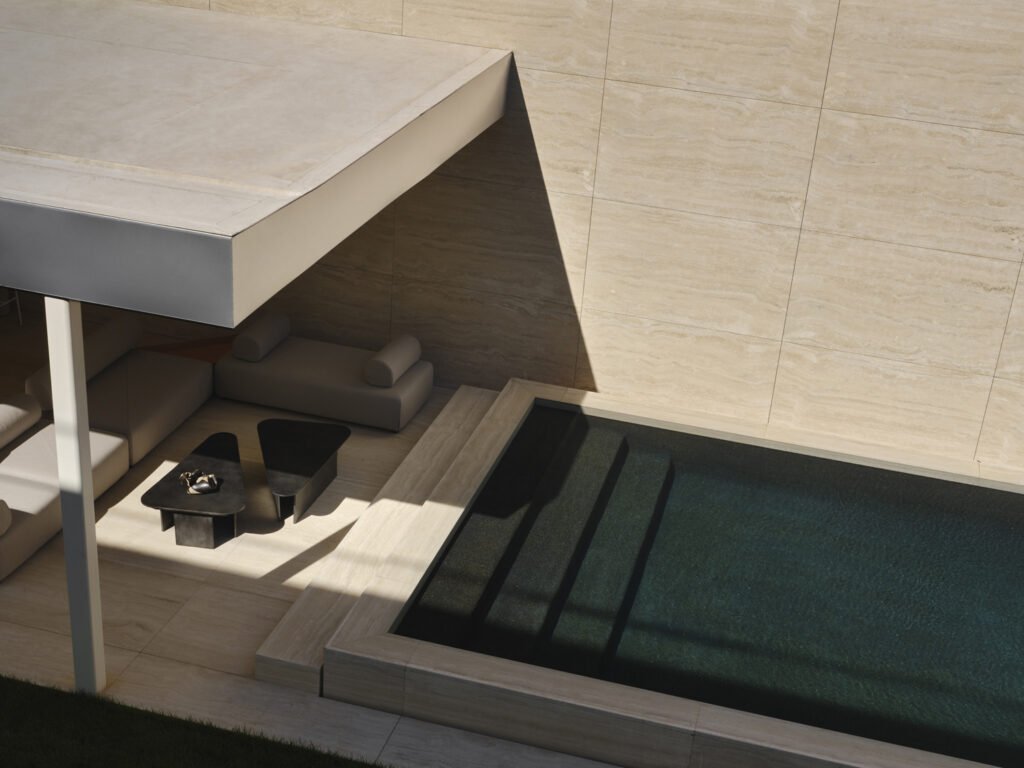
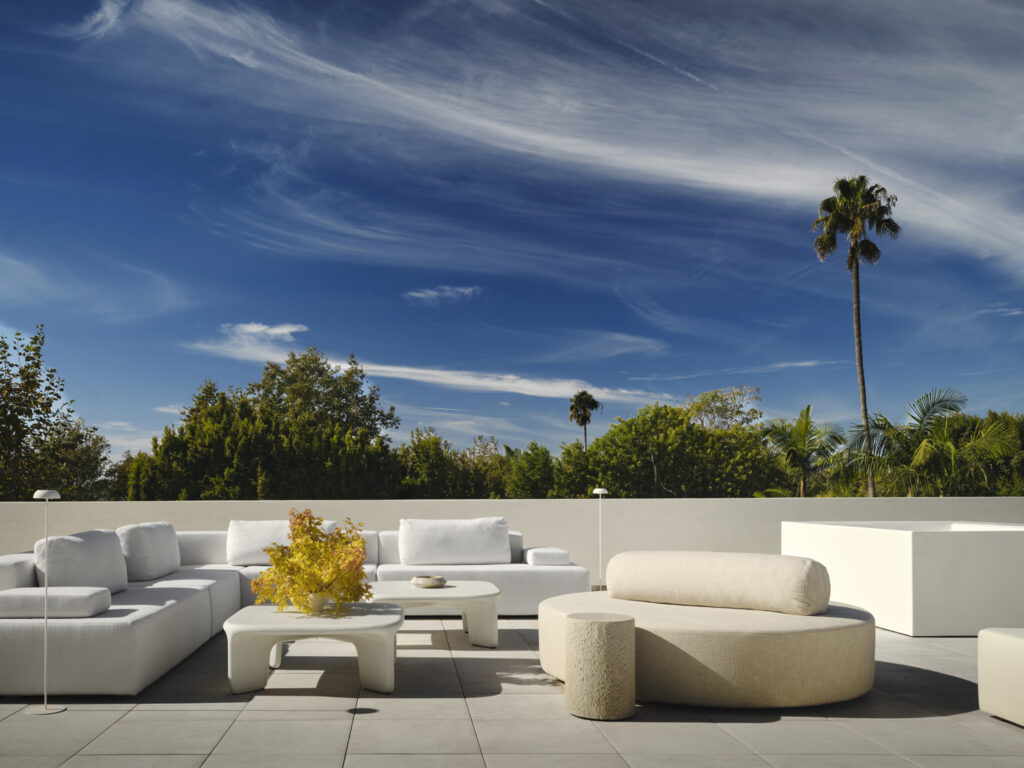
“The clients have this incredible art collection and wanted a really spectacular place to show it off,” Rose explains. Philadelphia-based architect Carl Massara, a friend of the clients who’s known for his big, bold, rectilinear forms, had sketched out the broad strokes of the home’s layout, including an imposing wall that separates the main property from the guesthouse. “We took his modernist shapes and kind of ran from there.” They specified travertine for the wall and paired it with a four-sided infinity pool and a striking pavilion; the muscular angles of these structures seem to nod to the brawny lines of The Getty Center, visible from the home’s roof deck.
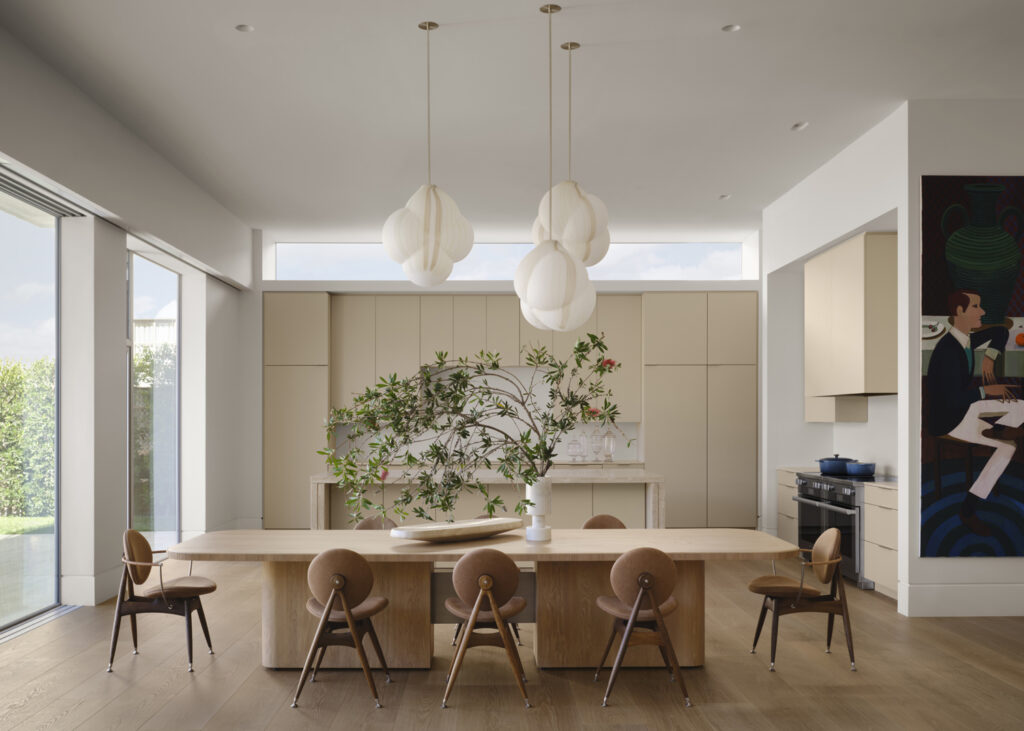
While the husband—who also served as the general contractor—would have been happy living in an austere gallery space with glossy walls devoid of ornamentation apart from his beloved art, the wife was vehemently opposed to that idea. “She wanted a place that would feel welcoming and intimate when it was just them, their son and their dog and that would also work when there were 150 guests,” Rose notes. Adds Kalichstein, “They needed these large rooms to accommodate their art. But that creates its own dilemma: How do you carve inviting rooms out of vast spaces?”
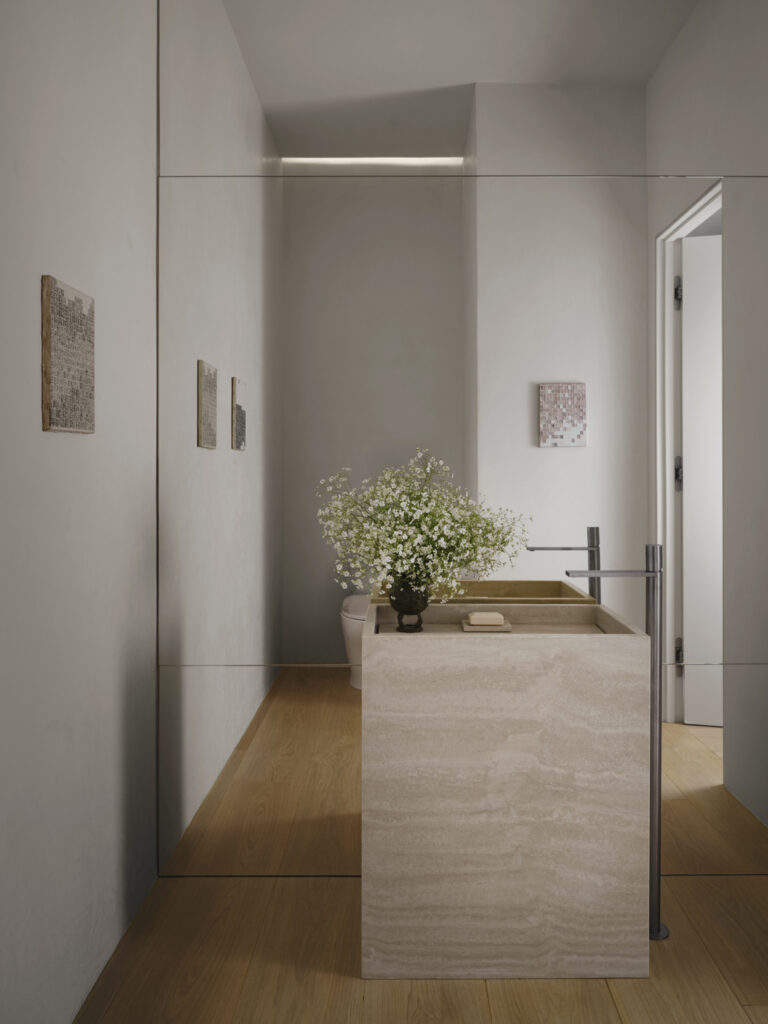
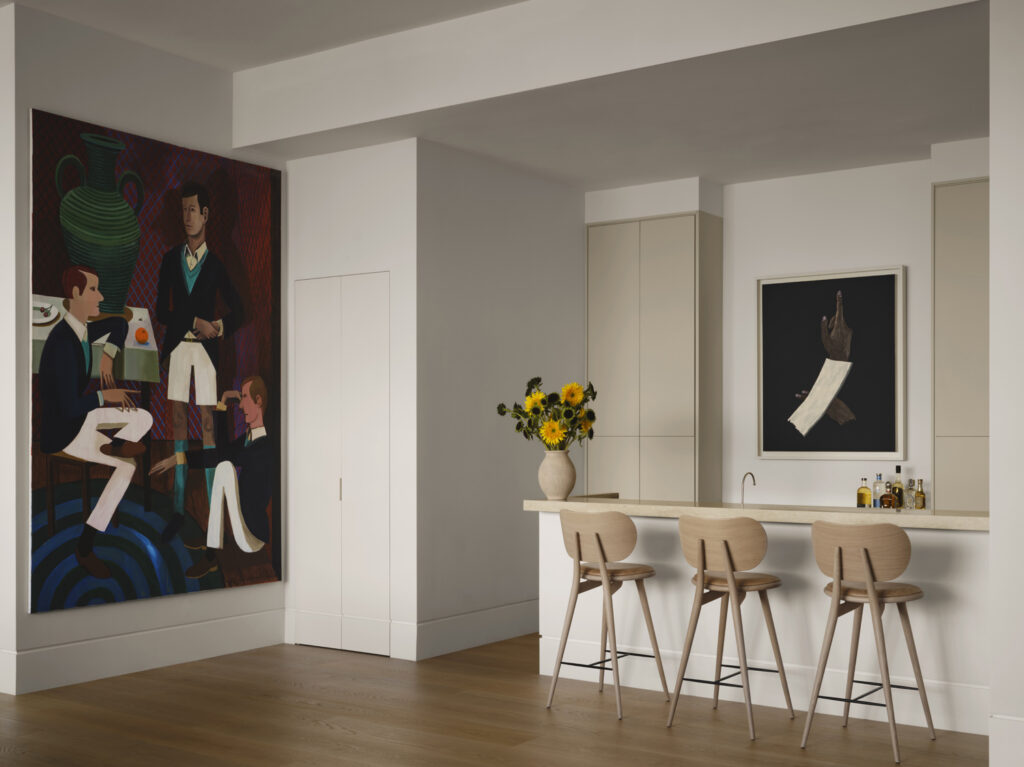
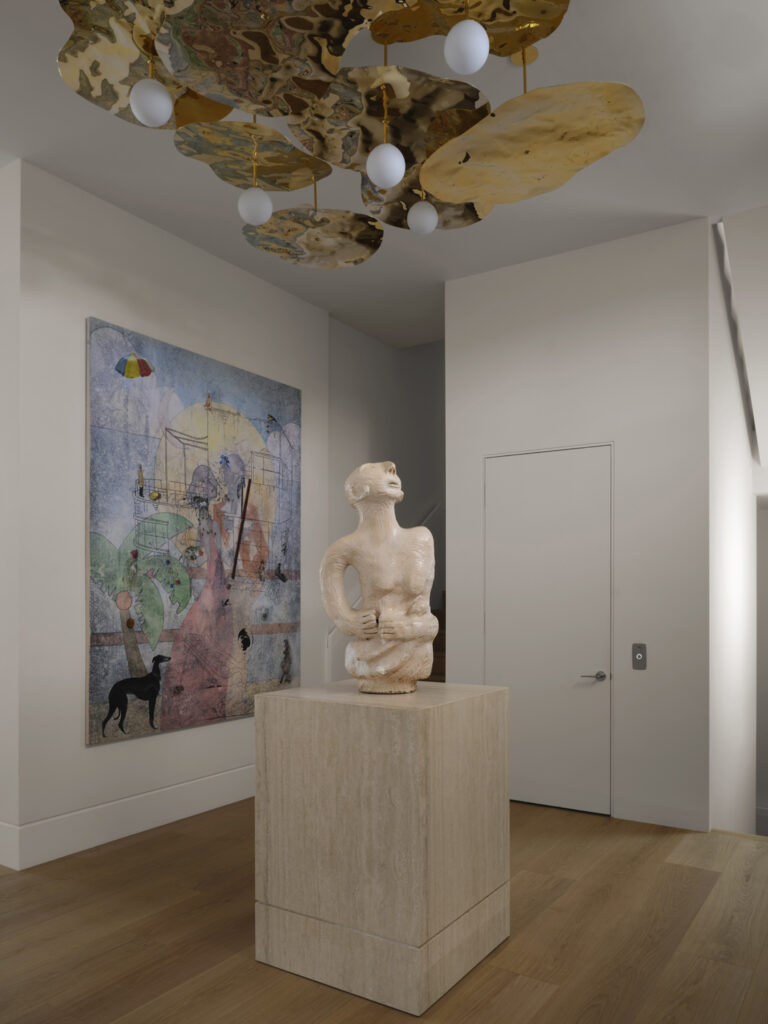
The key lies in controlling the interplay of light and shadow to fine-tune a room’s atmosphere. “The client was very focused on minimizing the home’s heat gain,” Kalichstein shares. That not only impacted the placement of window openings but the details—finishes, textures, materials and colors—that subtly alter the perception of a room’s mood. And, given the husband’s propensity for simplicity, every decision carried an enormous amount of weight. “We’re always thinking about how the eye will move to maintain that ideal mix of intrigue and calm,” says Kalichstein.
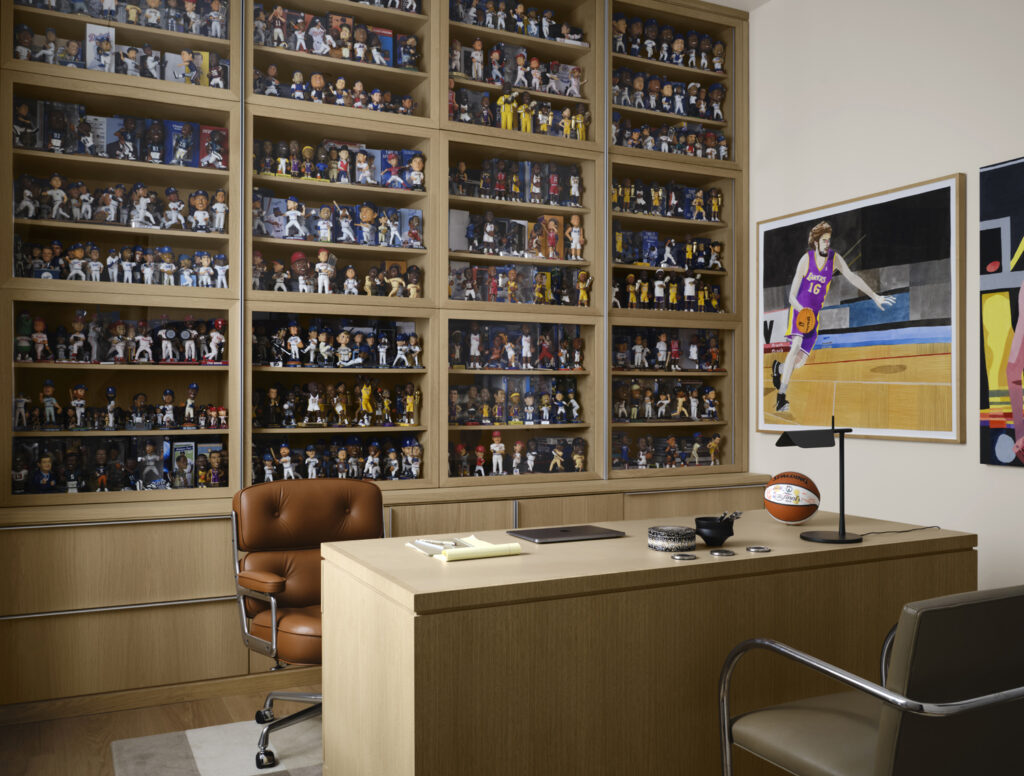
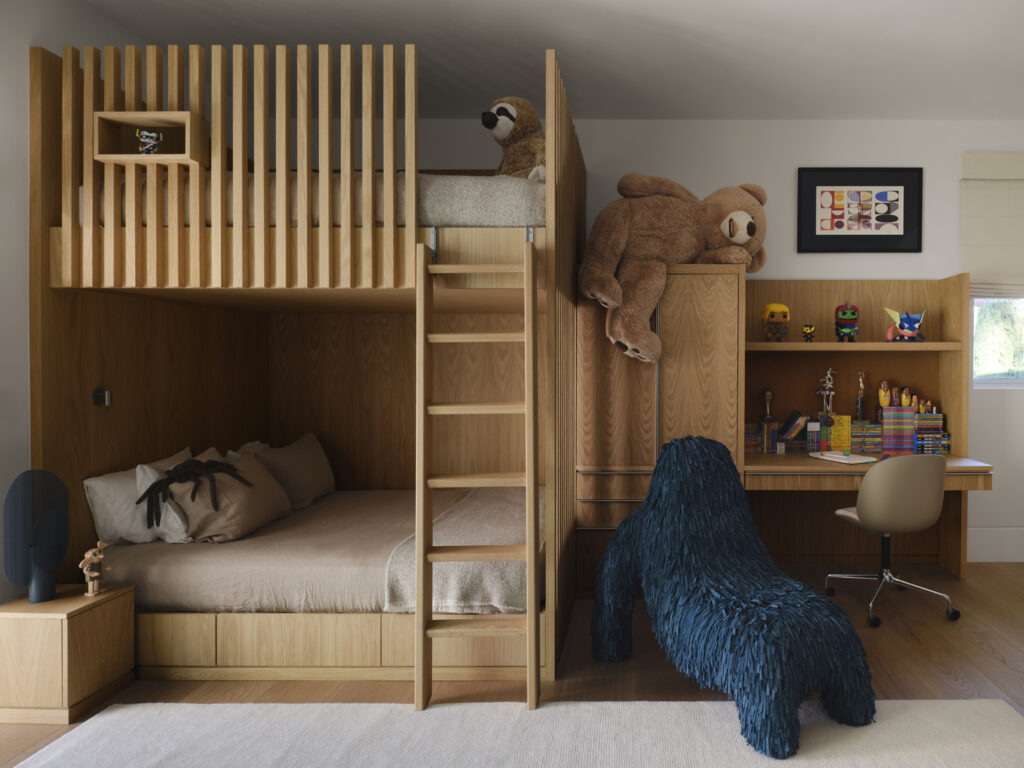
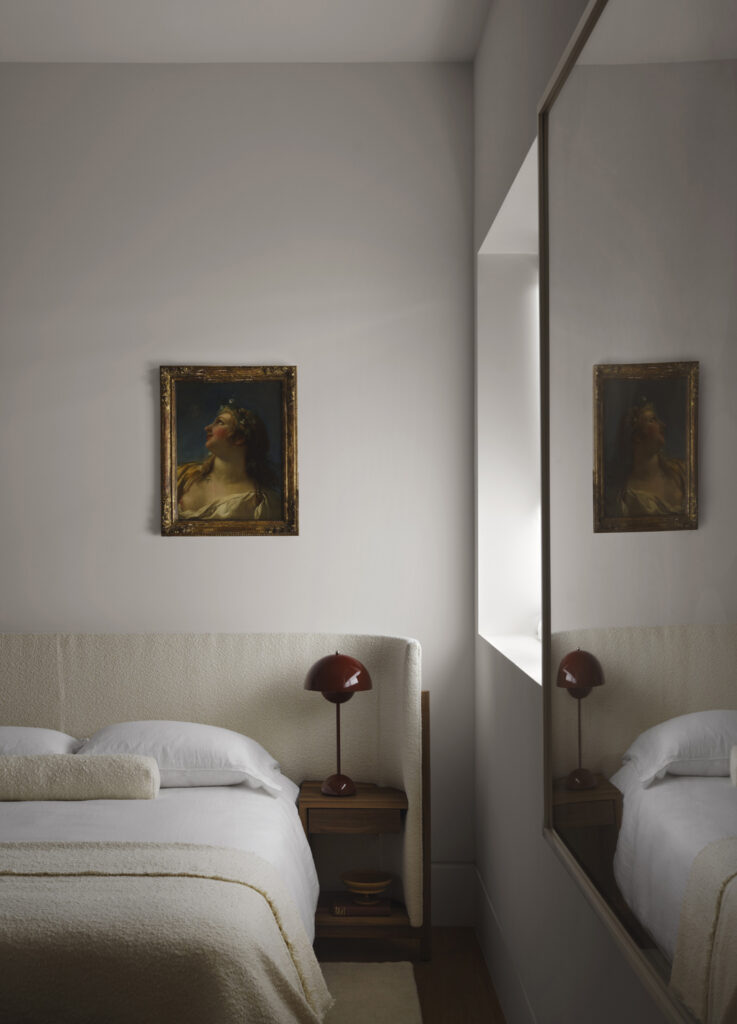
That meant using a lime paint but ensuring that it back-brushed onto walls, creating a mottled surface that diffuses light, encouraging a feeling of tranquility. It meant stipulating the small separation between the staircase and the elevator shaft that pierces the middle of its whorl, encouraging sunshine to wend its way inside. It meant specifying reveals at the baseboards.
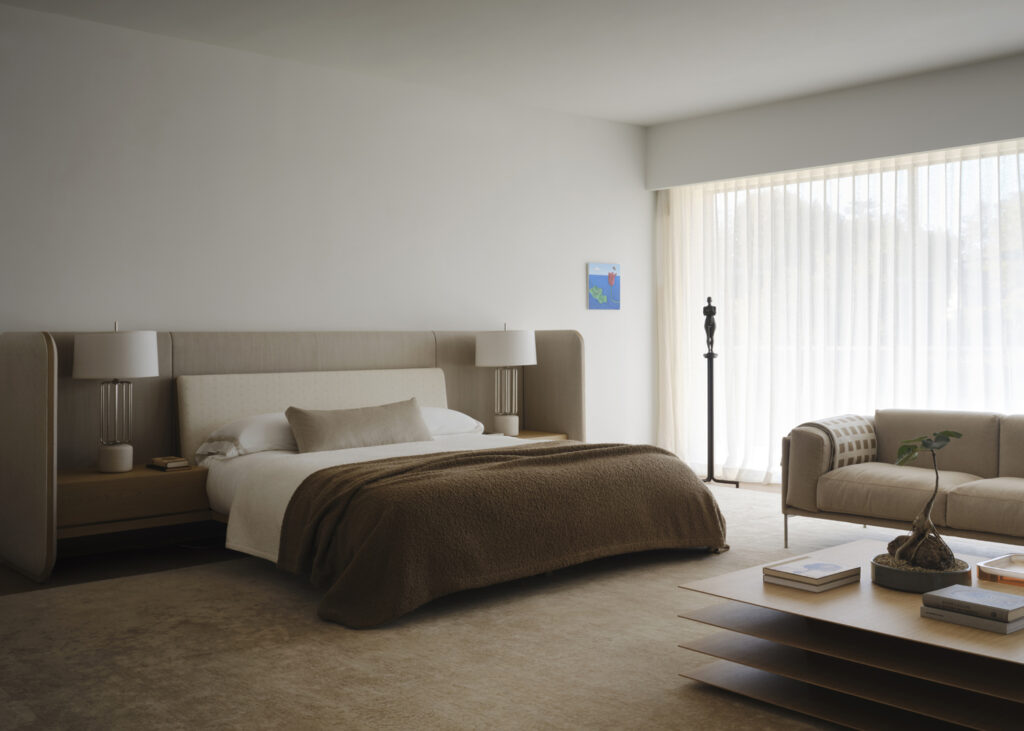
Photos by Douglas Friedman.
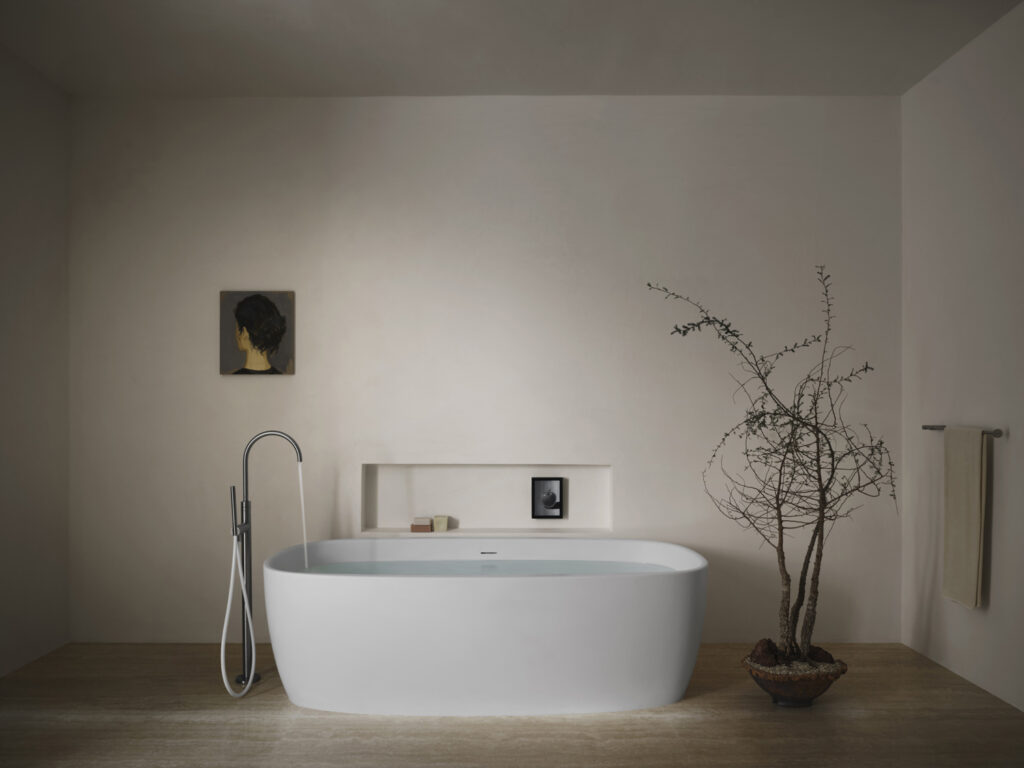
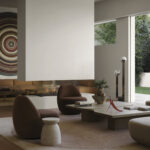
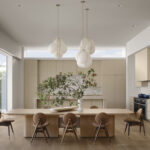
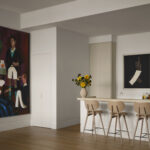
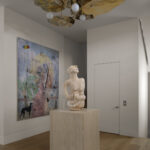
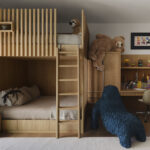
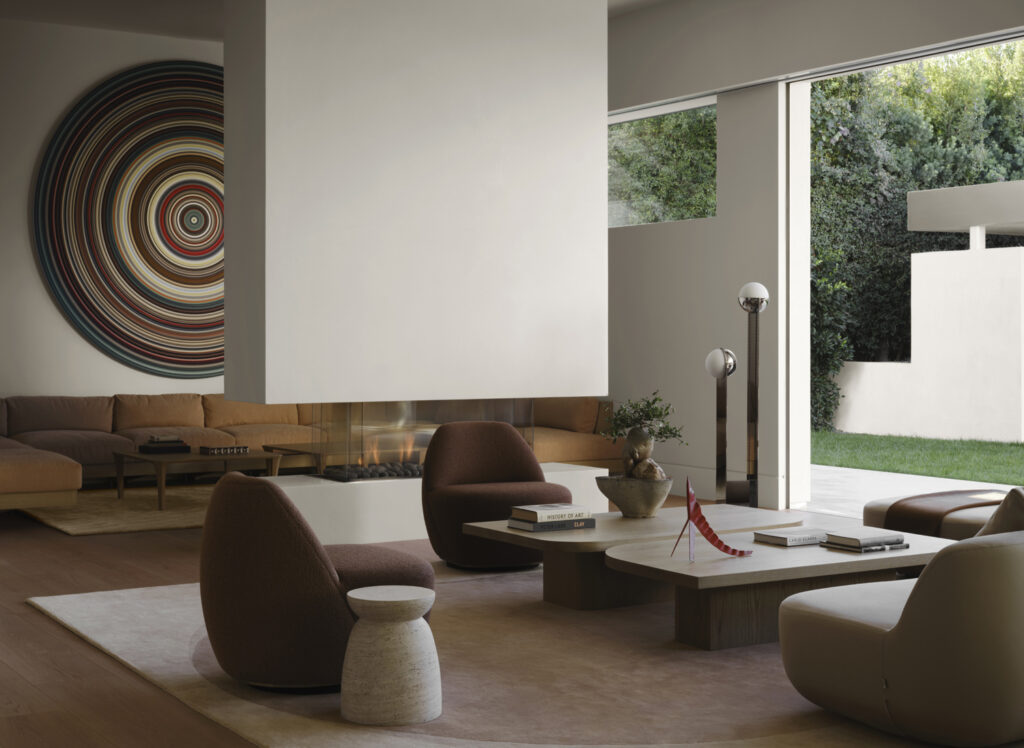
It also meant choosing furniture, like the living room’s Paola Lenti sectional and its Dmitriy & Co swivel chairs, upholstered in lush, tactile fabrics. It meant designing pieces, like the expansive rift white oak din- ing table, surrounded by Overgaard & Dyrman’s leather and smoked oak dining chairs, or the bunk bed that dominates a corner of the son’s room, which is fabricated from dense hardwoods with hand-rubbed finishes. It meant commissioning unique pieces from the firm’s global coterie of craftspeople, like the lights illuminating the dining room and the entry, created by Paris-based Jeremy Maxwell Wintrebert, or the stonework, sourced and fabricated by Italy’s Casone Group. It’s that underlying sense of craft that layers these spaces with warmth, commingling the characteristics of the imperfect and the handmade with the idea of modern and sleek to create something entirely of the moment. “The magic is that it’s a contradiction and yet it’s not entirely what we’re about,” says Kalichstein. “Making the world more beautiful by doing it together, and having every action be intentional and deliberate.” Let’s call it the future, reimagined.