Next Stop: Seattle
Author:Lindsey ShookAt Populus Seattle, the planet and people are the top priorities
Every city has that one neighborhood that is experiencing a notable revitalization—in Seattle that’s Pioneer Square. Once considered the major industrial hub of the Pacific Northwest metropolis, the area is a global destination for food, arts, sports and high-design hospitality—including the newly renovated hotel Populus Seattle.
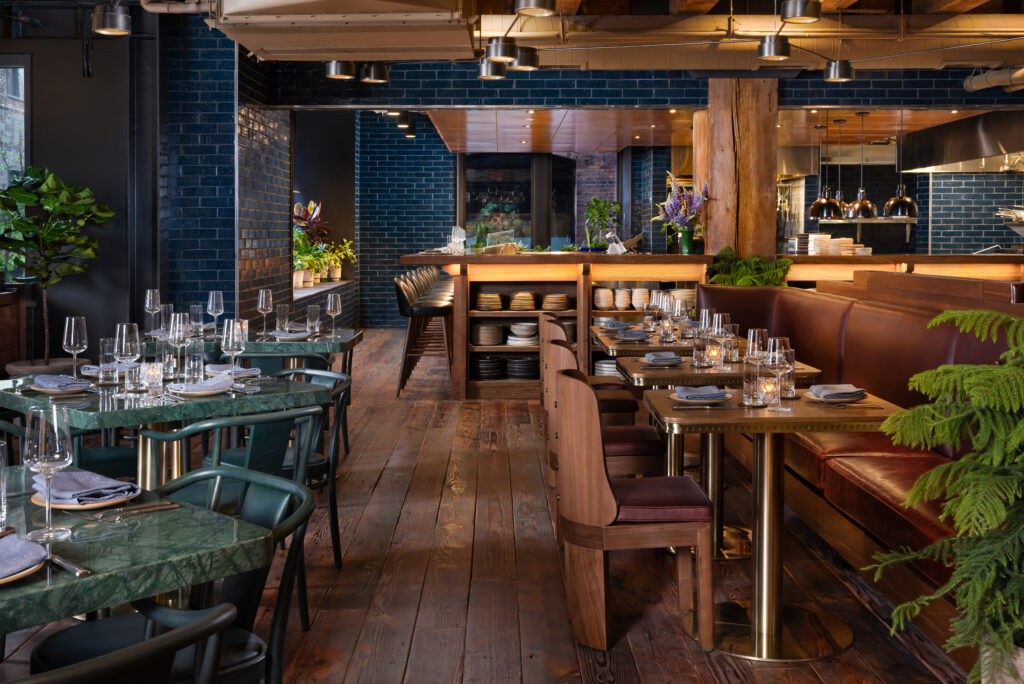
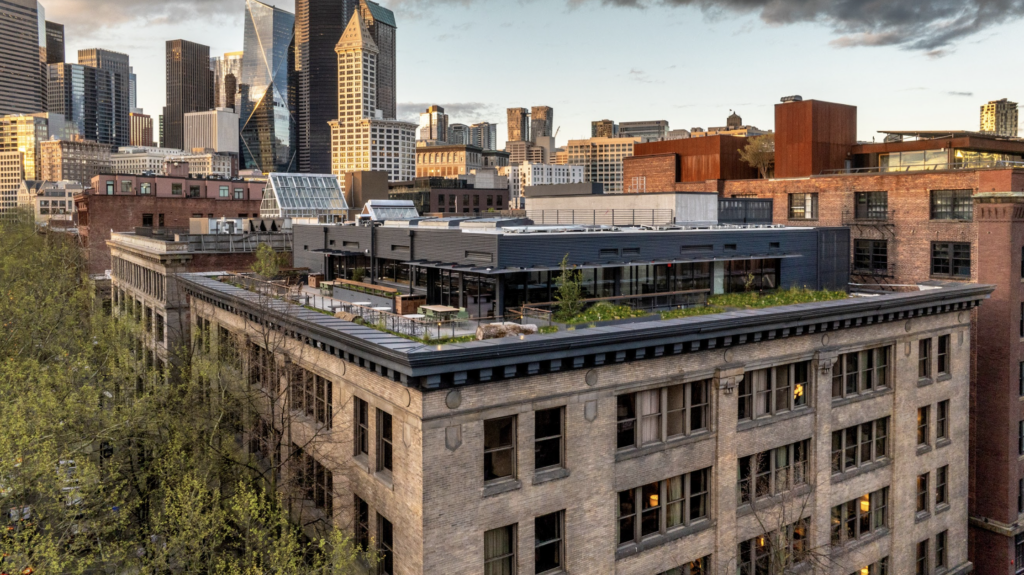
Located in the Westland Building, which was originally purposed as a wholesale warehouse and supply facility for steam pipes and plumbing parts, the Seattle 120-room hotel was transformed through architecture by Miller Hull Partnership (Miller Hull), with interiors by Curioso and landscape design by Seattle-based Site Workshop and Camden Gardens. Owned by Urban Villages and operated by Aparium Hotel Group, Populus Seattle is the second carbon-positive hotel in the country (Populus Denver was first)—and the story of how it got there is as much about restraint as it is about innovation. “Denver proved the thesis: that a hotel can give more back to the planet than it takes, and that guests will respond to it when the story is told honestly,” says Jon Buerge, CEO of Urban Villages. “Preserving the Westland Building’s structure avoided an enormous amount of embodied carbon before we ever bought a single offset. Denver taught us to lead with proof and local partnership; Seattle taught us that preservation itself is a climate strategy.”
Actions speak louder than words, and what the Urban Villages team has achieved says it all. To fulfill what preservation alone couldn’t eliminate, they turned to King County’s Forest Carbon Program to acquire 2,000 tons of Verra-certified forest carbon credits from Washington-based projects. That offset covered the property’s embodied carbon footprint of 1,630 metric tons of CO2e, making Populus Seattle carbon positive. “We could have bought perfectly valid credits from anywhere in the world, but a hotel that is this rooted in the Pacific Northwest shouldn’t be sending its climate dollars to a forest none of us will ever see,” says Urban Villages sustainability consultant Scott Broadbent. “Sourcing through King County means the impact, conservation, new parks and protected greenspace stays in the region our guests are actually visiting. It keeps the story honest: The nature we celebrate inside the building is the same nature we’re protecting a few miles outside it.”
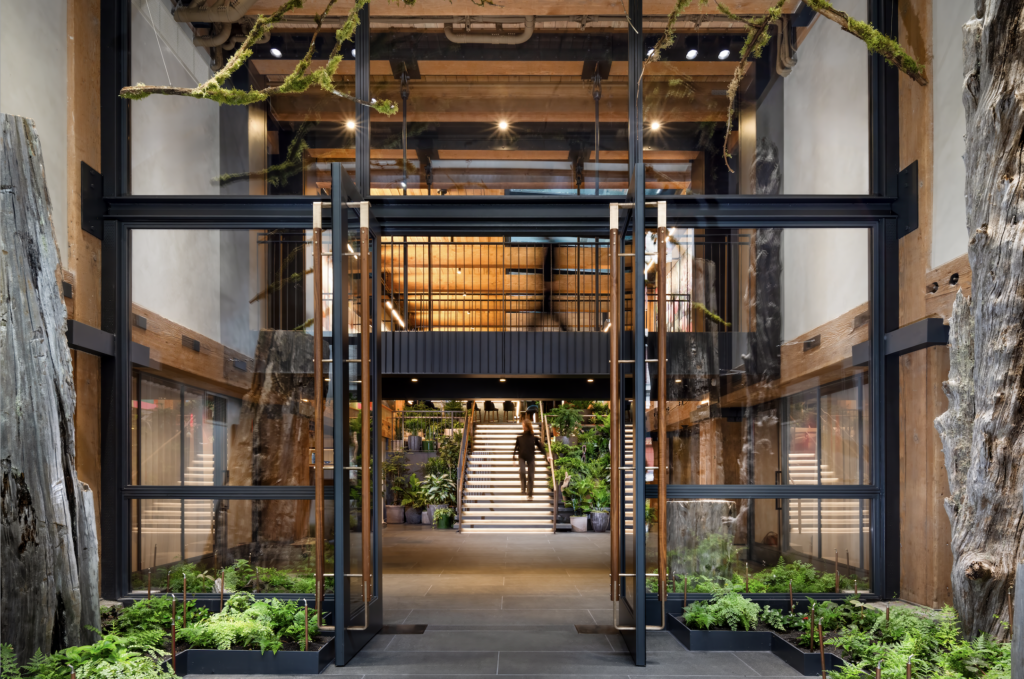
Beyond sustainability, the design, the art program and the community cultivation play an essential role in the hotel’s ethos. And you feel it when you walk through the front door. The design team at Miller Hull took cues from the existing form by expanding a skylight that was installed during a prior renovation. “The guiding question was always: What does this element do best for the building and for the guest?” says Mike Jobes, principal at Miller Hull Partnership. “Some elements we reinterpreted, letting an old industrial detail take on a new life. Preserve where the history lives, relocate where the material can do better elsewhere, reinterpret where the past can speak to the present.”
Few features in the hotel carry as much weight as the G(host) Forest—an installation in the lobby of reclaimed logs and native plants that is built from trees between 300 and 500 years old. “The emotional weight comes from what a ghost forest actually is—in nature, it’s a stand of trees stricken by some catastrophic change, left in place, ostensibly dead, and yet, in their slow decay, they become a host for countless other lives,” says Jobes. “The underpinnings of this very building were once a forest, felled long ago, and the southern edge of this block was once tidal, constantly in flux.” While natural, these elements shape a broader and more artistic approach to how hotels can remain light on the land while spiritually transforming the hospitality experience.
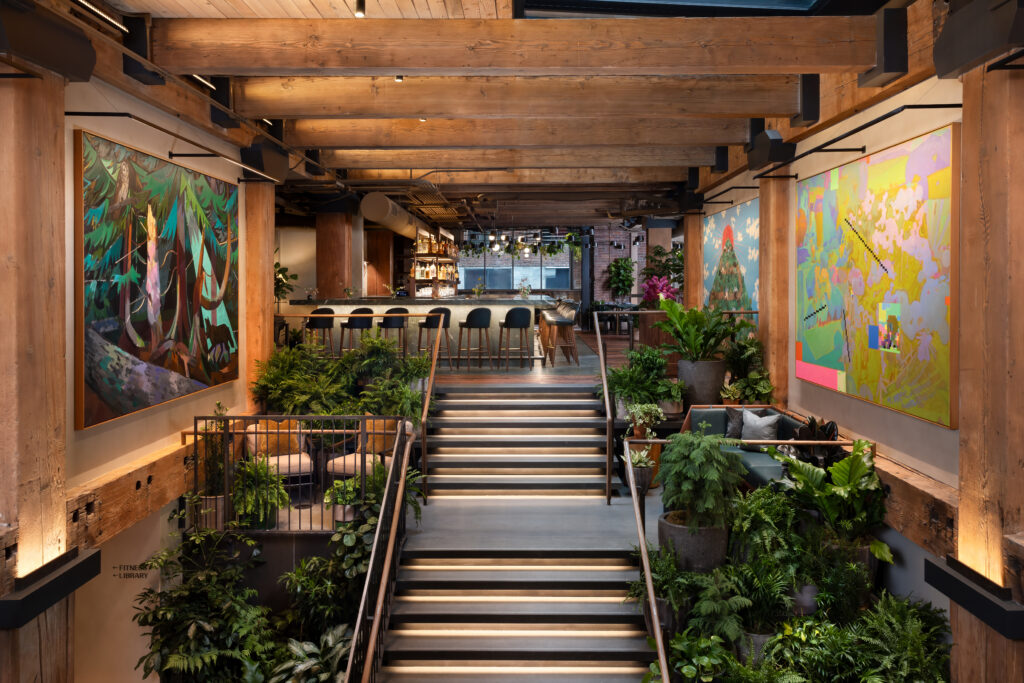
The team took a similar approach when developing the hotel’s art program. Rather than curate finished pieces and install them after the fact, Urban Villages hosted an on-site residency that produced 328 commissions from 35 local and international artists, all created inside the building itself. “A conventional process is transactional. You choose finished pieces and hang them,” says Dominic Nieri, senior director of curation and cultural stewardship at Urban Villages. “The result isn’t a collection of objects that happen to share a building; it’s a body of work that could only exist in this building. And because every piece is original and available for sale, the residency became an ongoing engine of opportunity for the artists rather than a one-time purchase.”
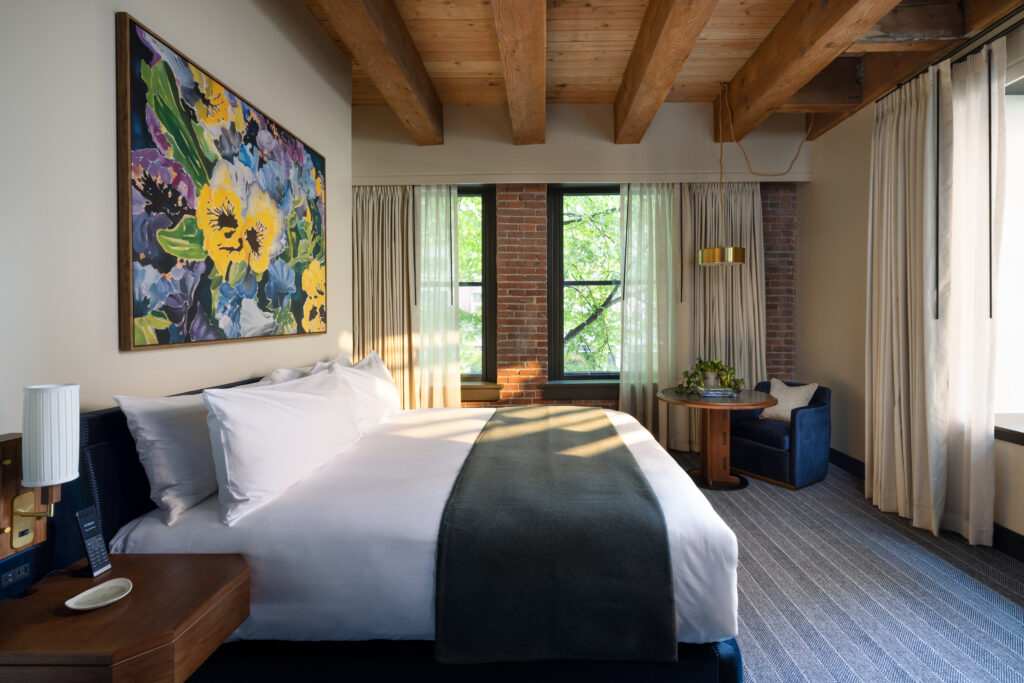
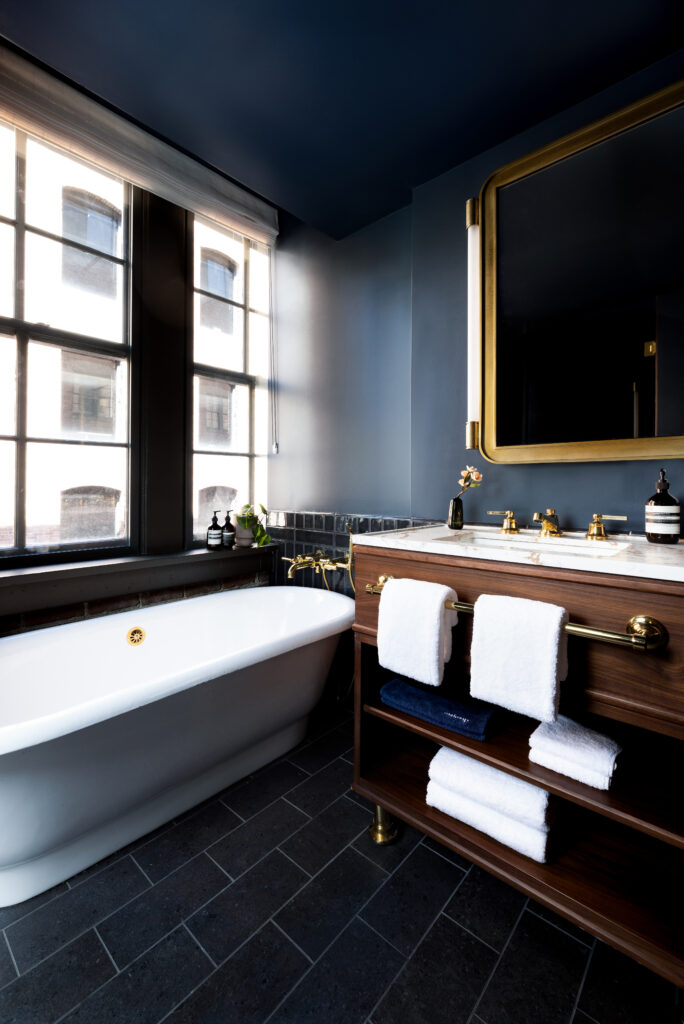
Curioso mirrored the design direction of embracing the surrounding natural environment and urban lifestyle with their interior selections. Each suite features soothing shades of blue, raw wood furniture, exposed brick walls, large-scale art and Waterworks fixtures. “We design for belonging first, because in order to care, we must first feel like we belong,” says Populus Seattle hotel manager Juriana Spierenburg. The collective goal was to design a space where locals and tourists can gather, feel inspired and rested, and leave with a renewed sense of self. “We want guests to rediscover that they can engage with the natural world rather than just look at it, and to carry out one small, durable idea: that enjoying a place and caring for it was never a trade-off, but the same act,” Spierenburg proclaims. “If someone walks out curious about the tree planted in their name, more aware of the Puget Sound a few blocks away, quietly conscious that they got to be a steward of this ecosystem for a night and could keep being one long after they leave, then this building has done exactly what it was reborn to do.”