Back to the Future
Author:Jessica RitzConner + Perry Architects restore a 1980s John Lautner home that feels rooted in place—and blissfully removed from time
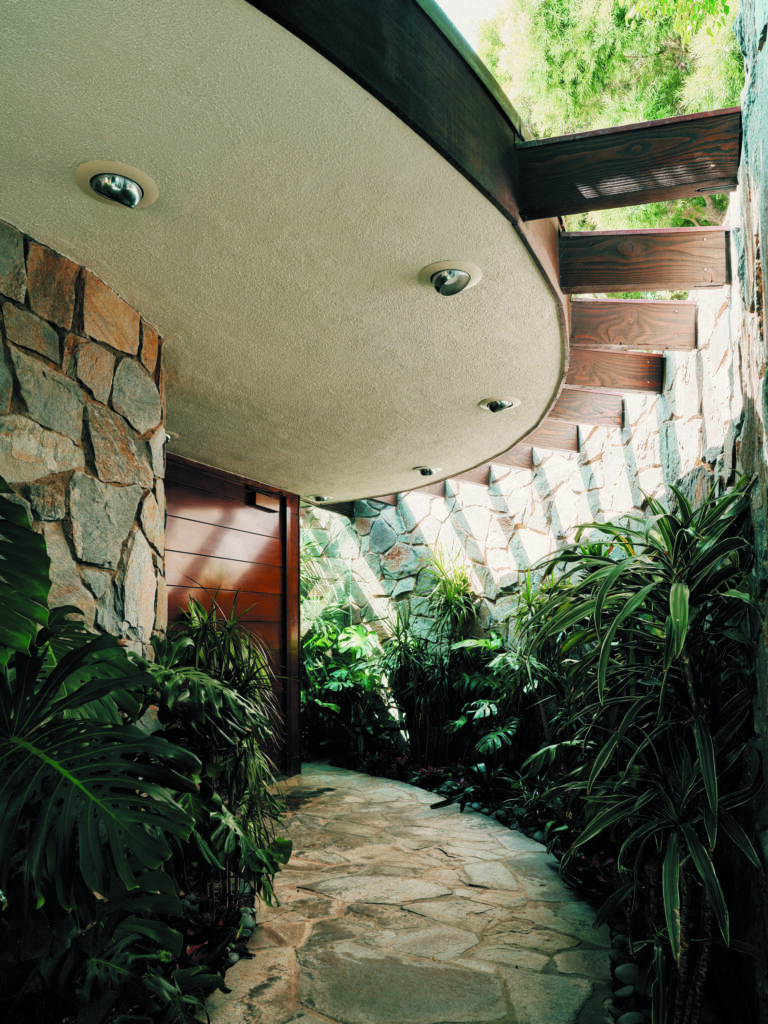
Grasping precisely why a John Lautner building may feel grounded and yet historically indefinable can be elusive. “It’s all simultaneously ancient and futuristic,” architect Kristopher Conner explains while approaching the entrance of a home dubbed Lautner’s Castle. The structure is a prime example of this dynamic, which alchemically combines The Flintstones and The Jetsons. A restored stone path, flanked by lushly landscaped integrated planters and stone-clad walls, leads to the Douglas fir front door sheltered beneath a swooping overhang. The scale and progression of this moment reflect the enduring imprint of Lautner’s mentor Frank Lloyd Wright—notably the “compression and release” maxim that juxtaposes compact entrances with relatively expansive interiors, making a visceral impression.
Photos by Joe Fletcher.
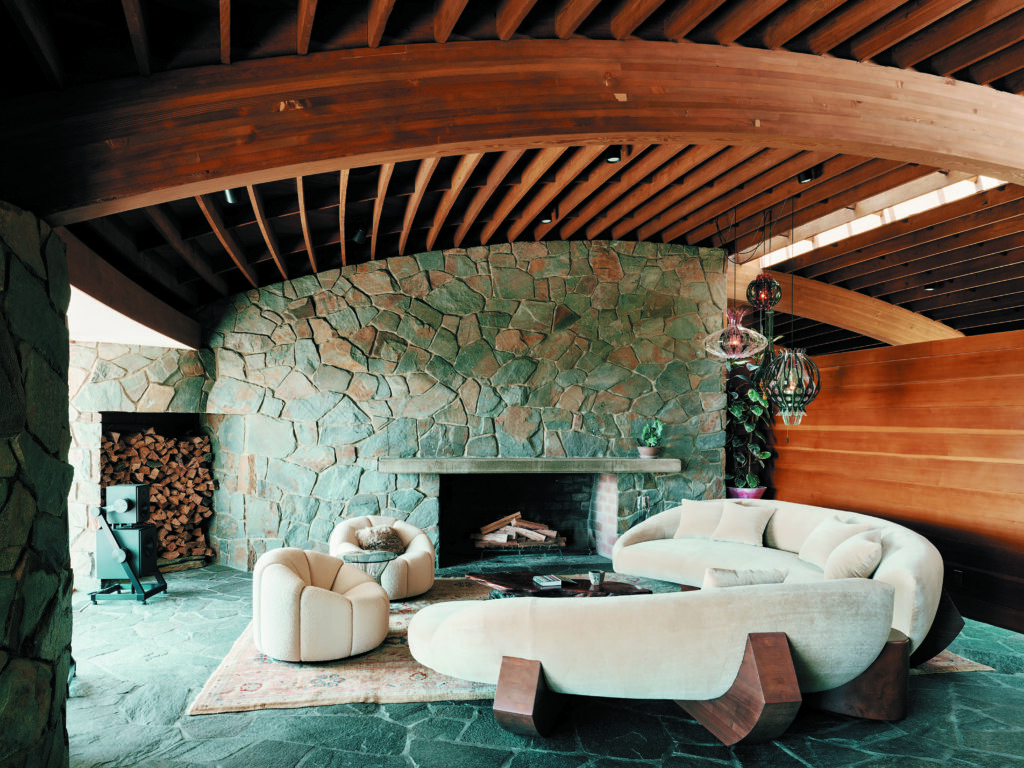
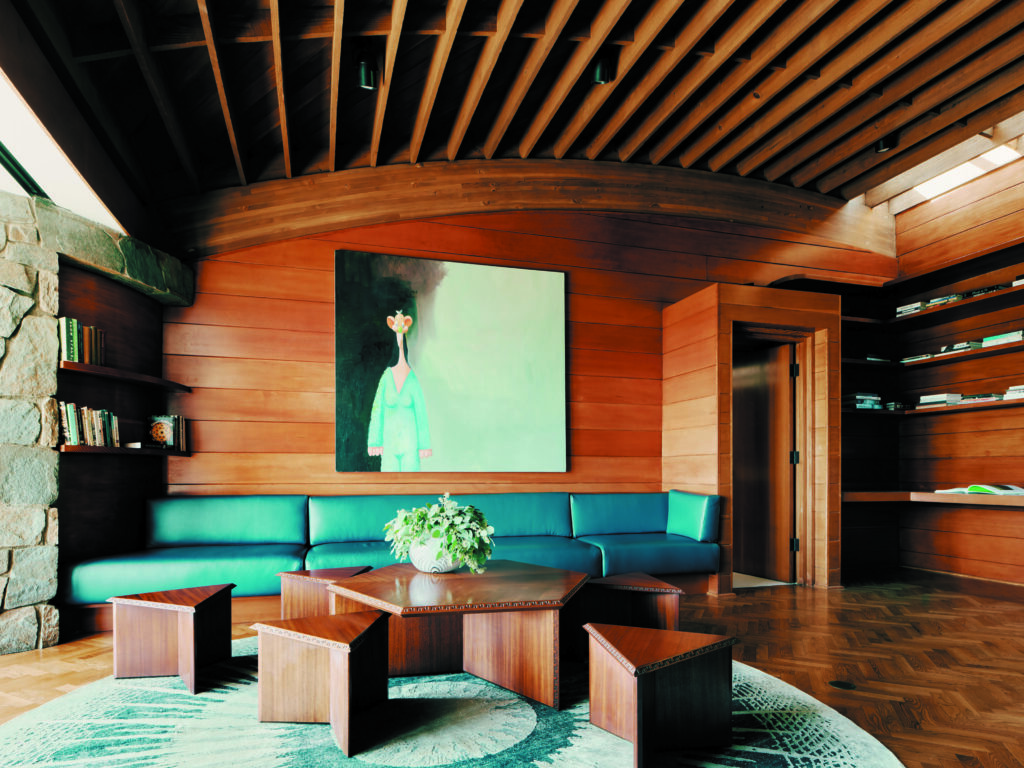
“It’s so unique and timeless,” elaborates James Perry, who, with Conner, founded Conner + Perry Architects in 2015. “I think that’s the thing that connects all of his work, except for some of the early [post]-Taliesin stuff,” Conner continues, referencing Lautner’s seminal period as a Taliesin Fellow at Wright’s hands-on apprentice program in Wisconsin and Arizona before he launched his own Los Angeles practice in 1938. Natural light streams in through the clerestory windows, softly illuminating the bent glue-laminated curved ceiling beams and vertical-grain Douglas fir paneling. Continuous stone flooring enhances the indoor-outdoor connection.
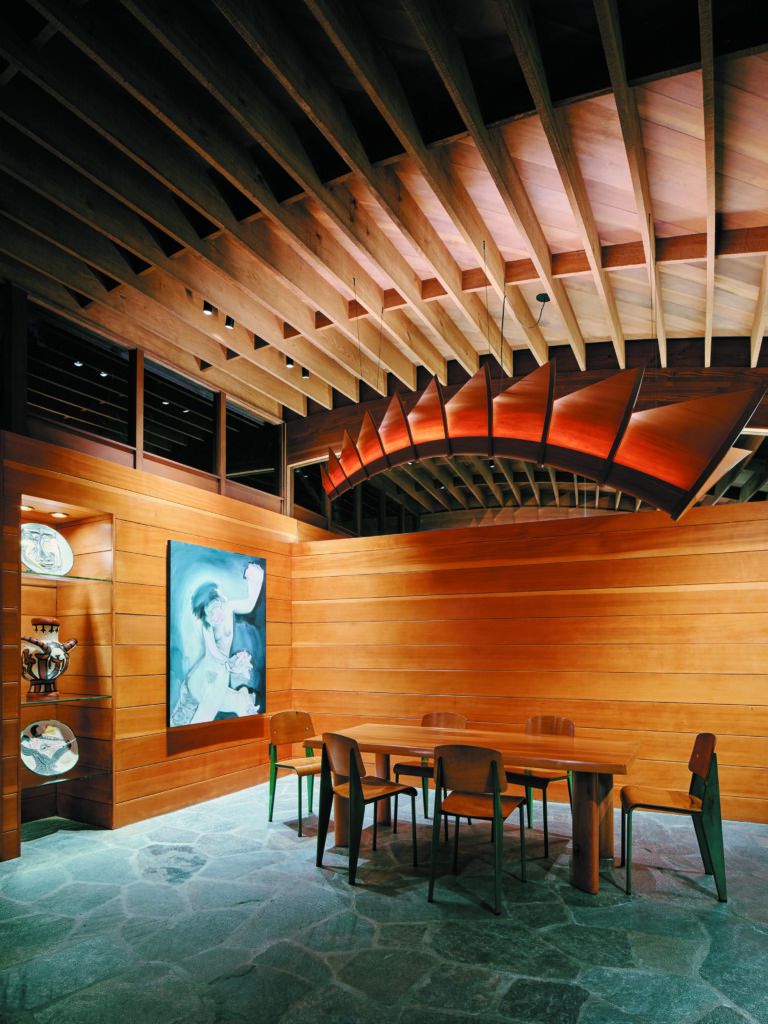
By the time Lautner completed this project in 1983 as he neared the final decade of his life and career, he had long been a master of creating one-of-a-kind, expressive environments. “This house is more interior-focused. The roof comes down, and the view gets framed between these stone turrets,” Conner observes about the multiple functional and structural stone-clad cylindrical volumes (hence “Castle”). “But you get that drama when you go out onto the terrace.”
Restoring the Castle is one of the many ways Conner and Perry are positioned to evolve and protect Lautner’s legacy. They have spent many years decoding the Michigan-bred seminal architect’s work and, in the process, understanding his philosophy and practice of organic modernism, which produced some of the most distinctive homes in L.A. and elsewhere. The duo were first colleagues in the studio of architect Duncan Nicholson, who had worked for Lautner and to whom James Goldstein later entrusted the ongoing experiment that is the iconic Sheats-Goldstein Residence, originally completed in 1963. Following Nicholson’s passing in 2015, Conner + Perry Architects has continued to collaborate with Goldstein and Lautner’s structural engineer, Andrew Nasser, on the intensive maintenance of the architectural marvel Goldstein bought in 1972, as well as its expansion (including the completion of Nicholson’s design for Club James, among other ambitions).
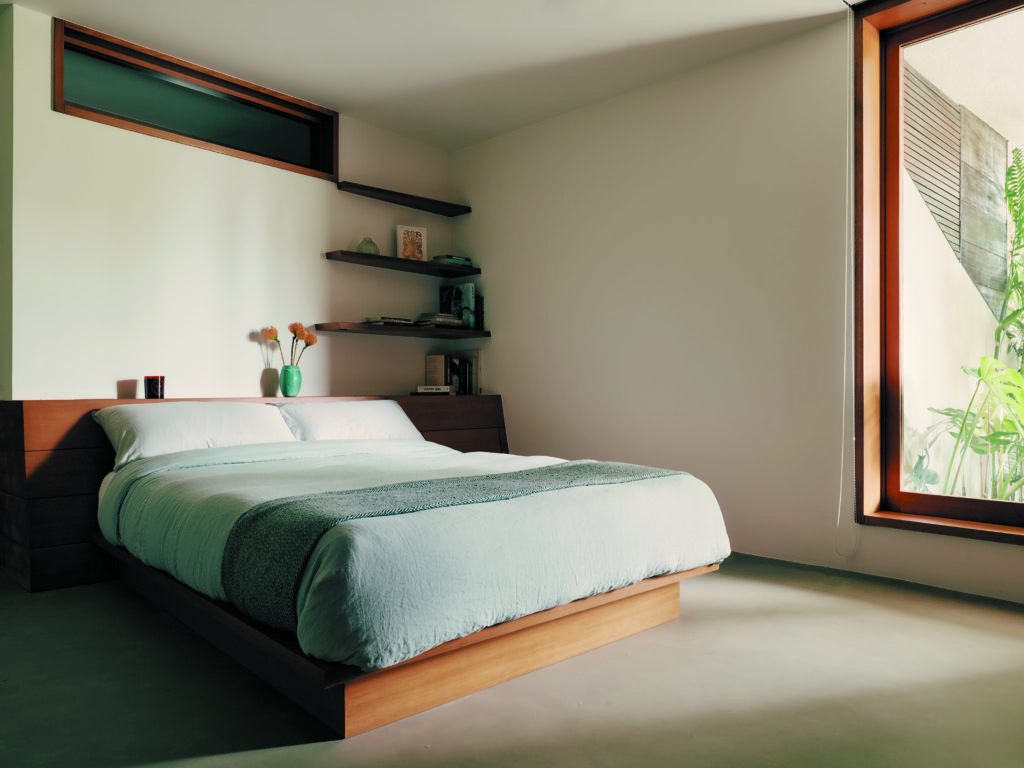
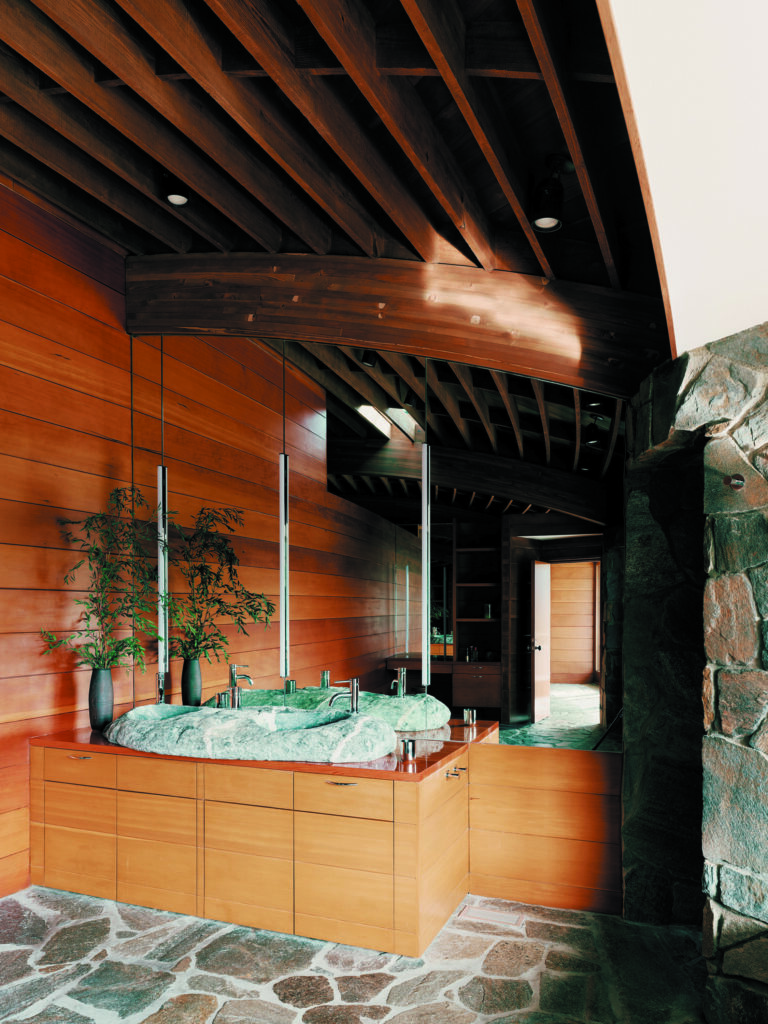
Photos by Joe Fletcher.
The firm’s hard-earned expertise came to bear at the Castle, which thankfully never had a brush with a negligent or insensitive owner. Nicholson himself had completed a minor renovation for the previous owners approximately two decades prior. “Any work that has been done on the house has always been in deference to Lautner’s architecture,” Conner says. “This owner wanted to make sure that the house was good for another generation.” Over multiple years spanning the Covid-19 pandemic, the scope included work both invisible and visible, starting with addressing water intrusion. Roofs, decks, thresholds, retaining walls and other essential yet unglamorous systems that allow a building to function—especially one based on what Perry describes as “a unique geometry”—called for meticulous repair.
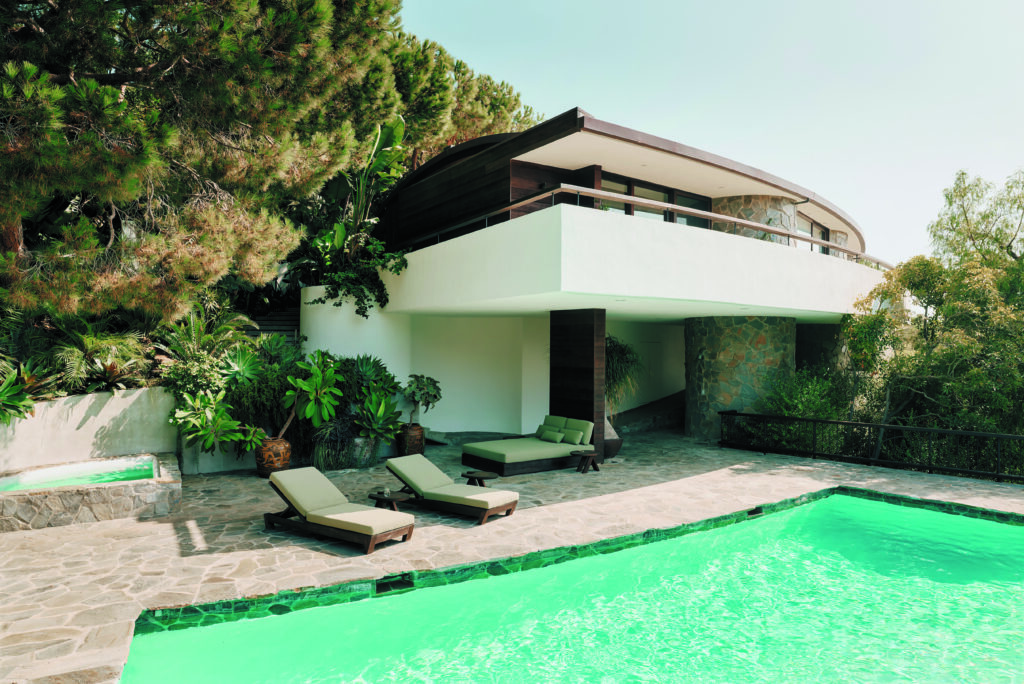
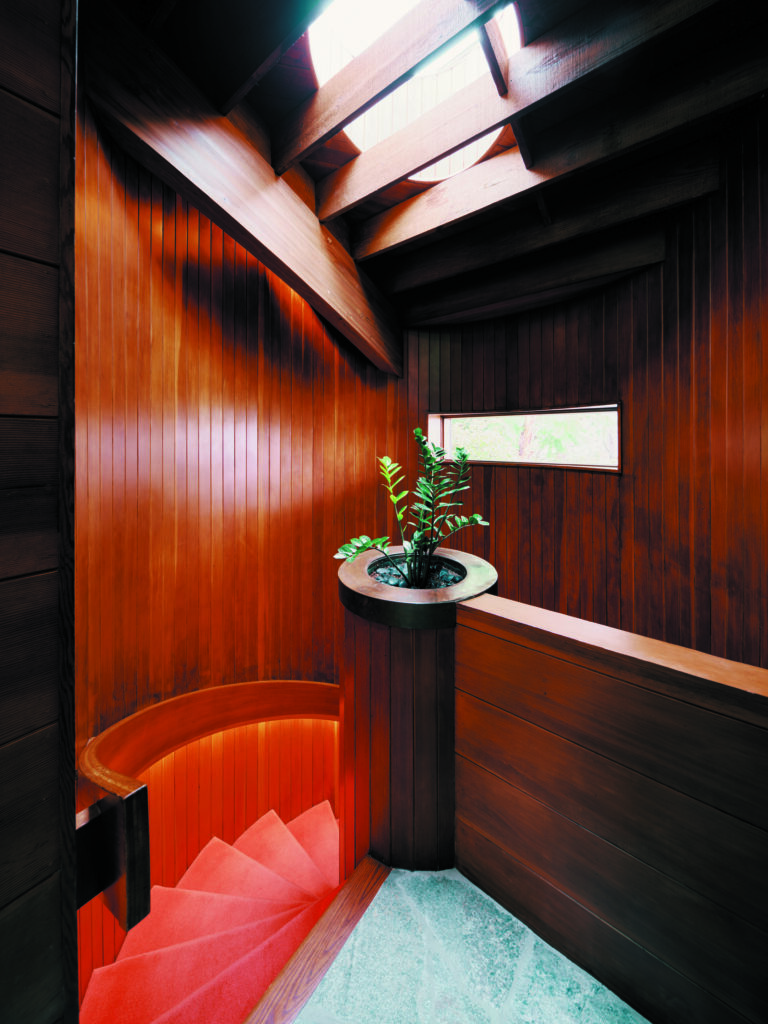
The architects and clients balanced architectural intent with flexibility. “It’s the 21st century, and they had certain needs,” Conner says of the homeowners. “That’s also the thesis of organic architecture: Use the client to inform the design,” Perry adds. Updates like an expanded vanity in the primary bathroom reflect this ethos, while other details are more subtle, such as the color-tunable LED systems that replaced fluorescent panel lighting. Damaged wood throughout was refinished and repaired whenever possible. The designers also found a suitable replacement for the tomato red wool carpet lining the spiral staircase that connects the upper level to the bedroom suites below, which are now vastly improved thanks to new windows and strategic interventions.
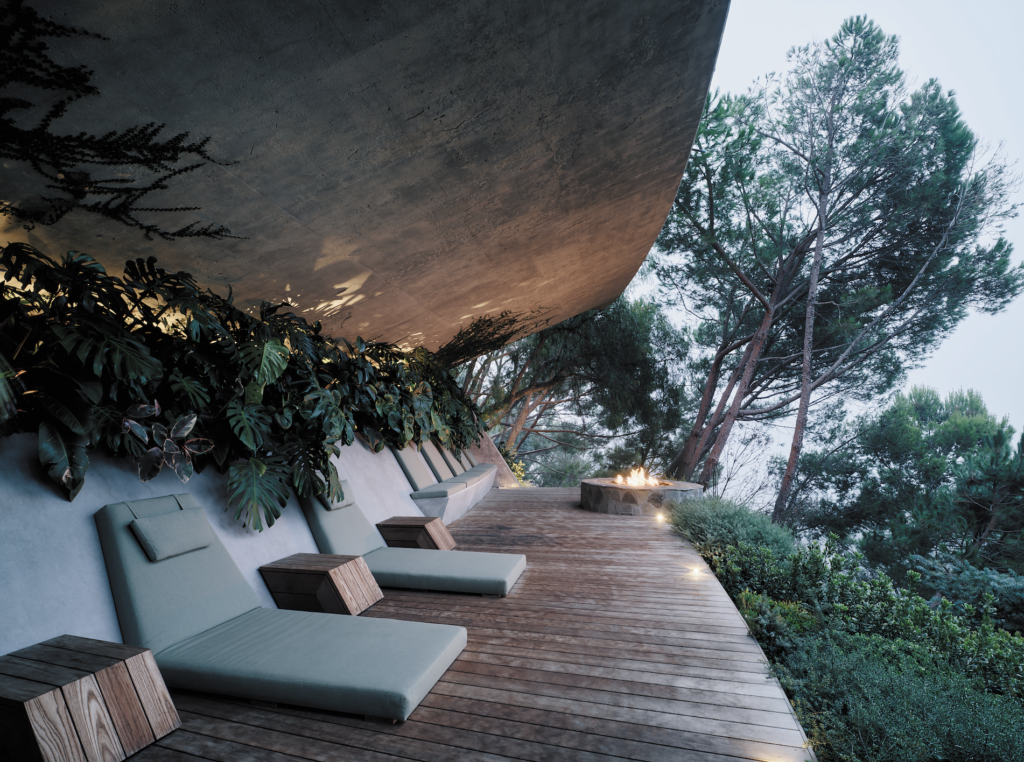
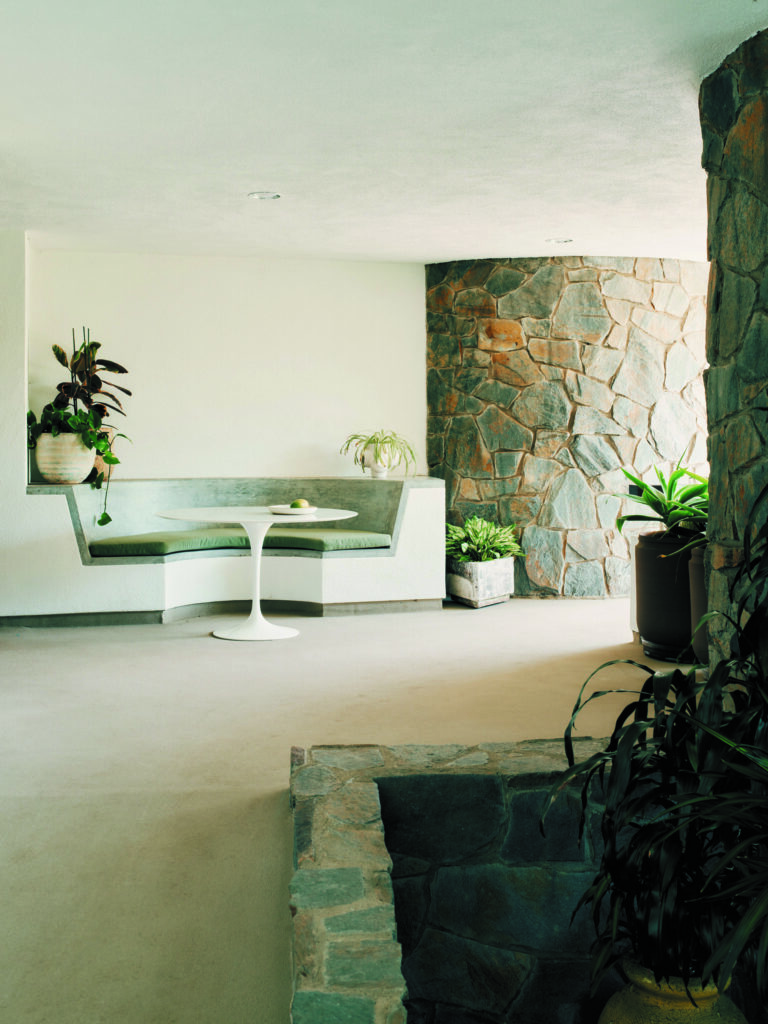
In addition to creating an outdoor kitchen and dining area near the pool, Conner and Perry uncovered more of the sprawling, steeply pitched grounds’ potential. The team transformed existing space directly underneath the pool deck into an alluring outdoor lounge complete with a fire pit and planters brimming with landscaping that evokes the spirit of Brazilian landscape designer Roberto Burle Marx. “It’s so Lautner in the structure,” Perry marvels. “It’s cantilevered to preserve the landscape.” In a succulent garden perched above the house on the other side of the site, they fashioned a cantilevered concrete bench that pays homage to a classic Lautner form.
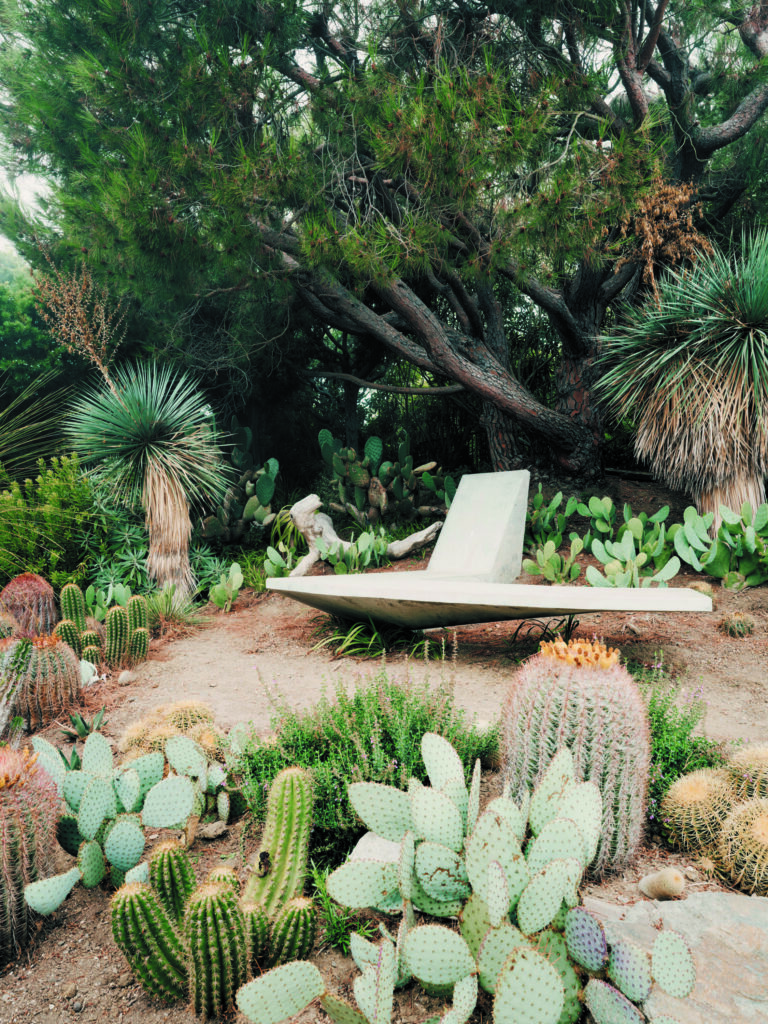
When immersed in this setting, neon color palettes, the then-new Beverly Center, Patrick Nagel imagery and other early 1980s design touchstones seem of another era. The care and attention given to Lautner’s Castle ensure its trend-ignorant, singular sensibility remains. “They had so much respect for the architecture,” Conner says of the current stewards. “That was the mandate from the beginning: to preserve the house.”