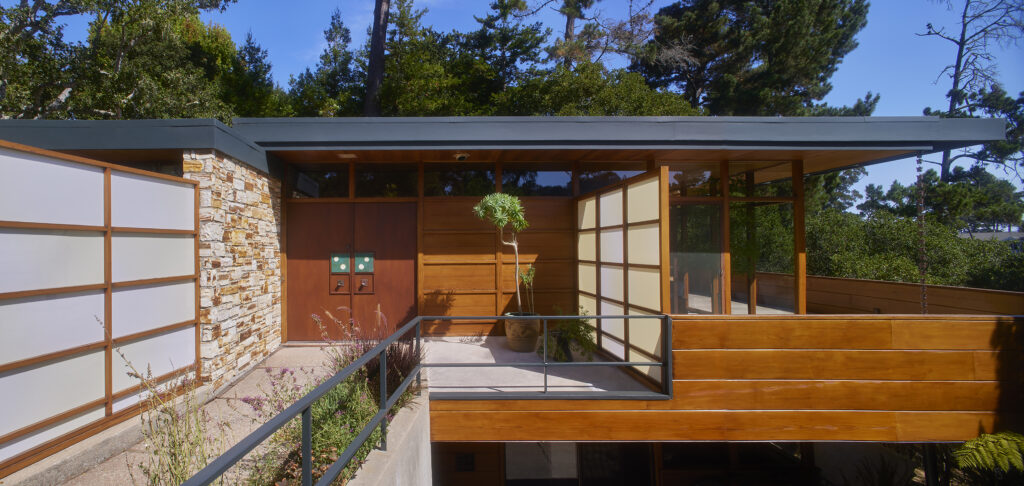
The Tree House
Author:Anh-Minh LeAmid leafy environs, a mid-century modern dwelling shines anew
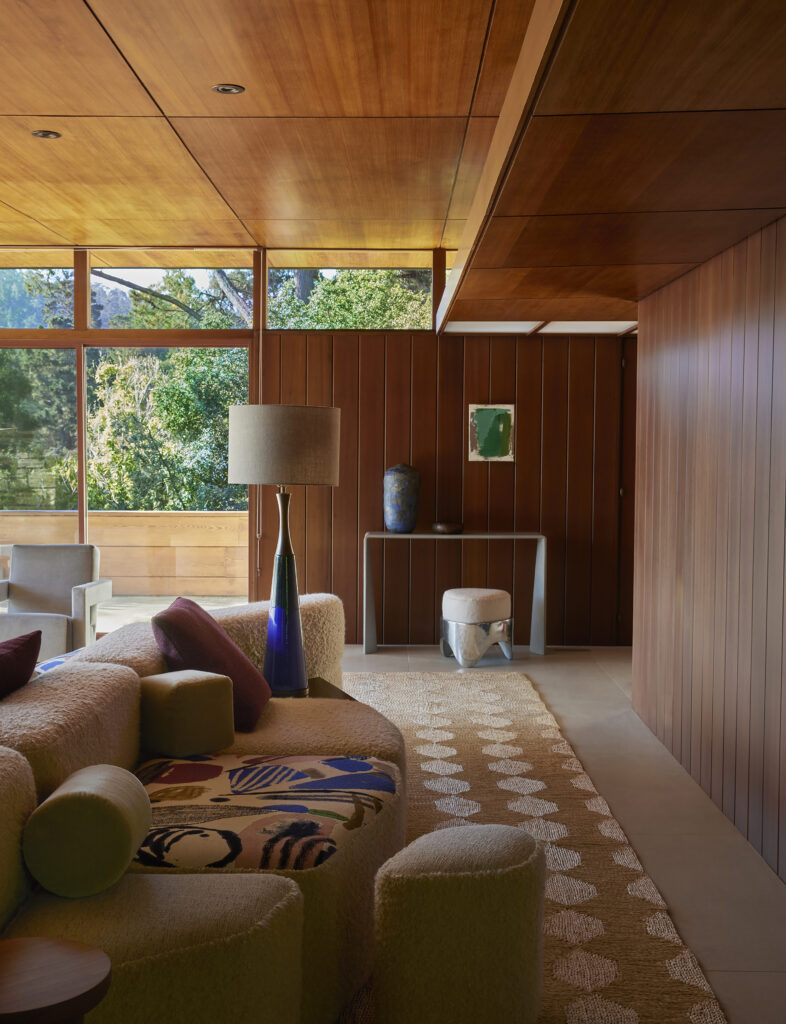
In reimagining a mid-century modern gem in Monterey, Michael Hilal was careful not to turn it into a “time capsule,” as he puts it. “People get a little too referential and it starts to feel like a Mad Men set as opposed to a place that someone lives in 2025,” the San Francisco interior designer elaborates.
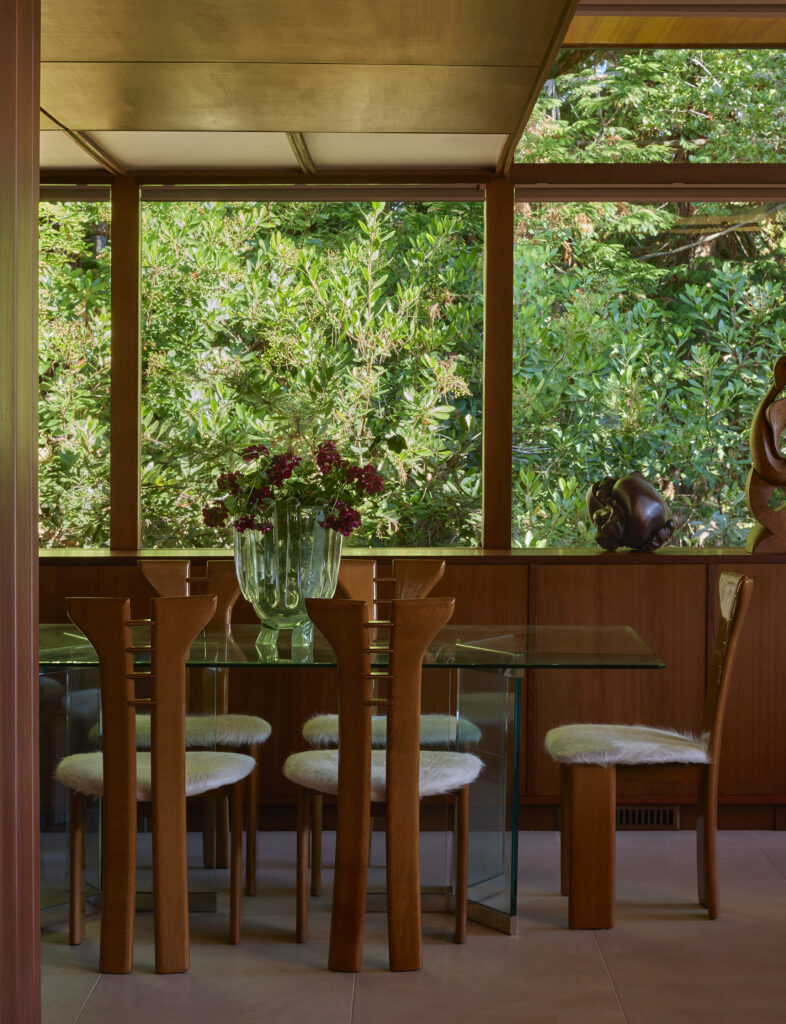
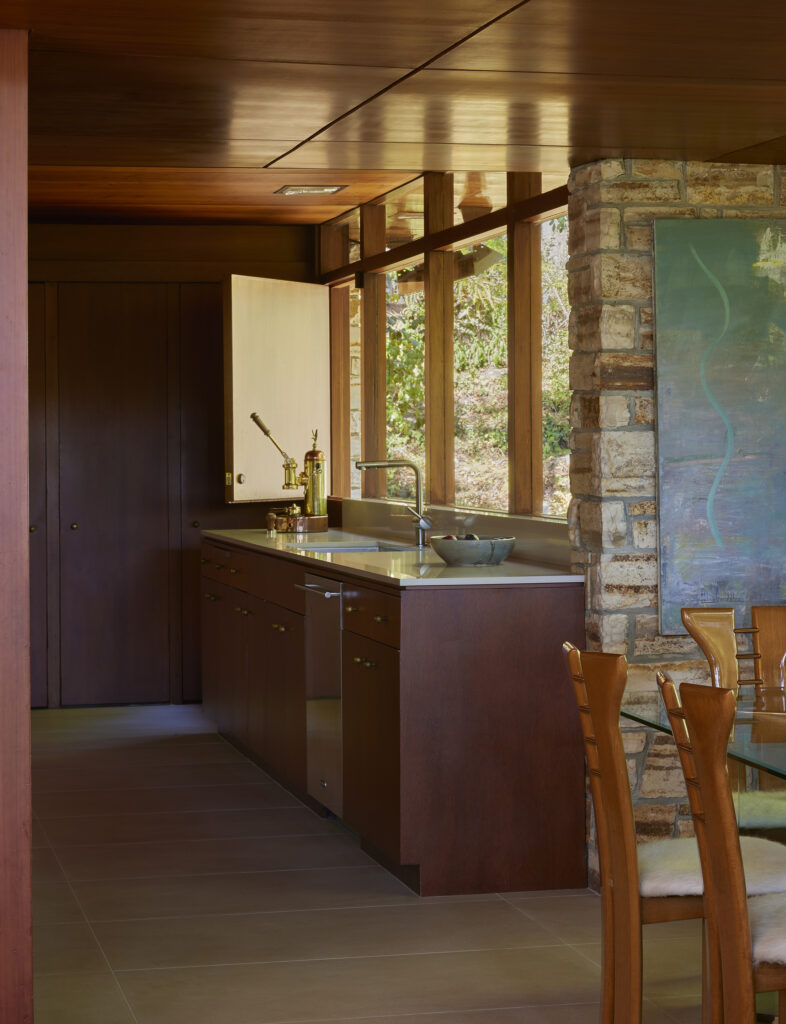
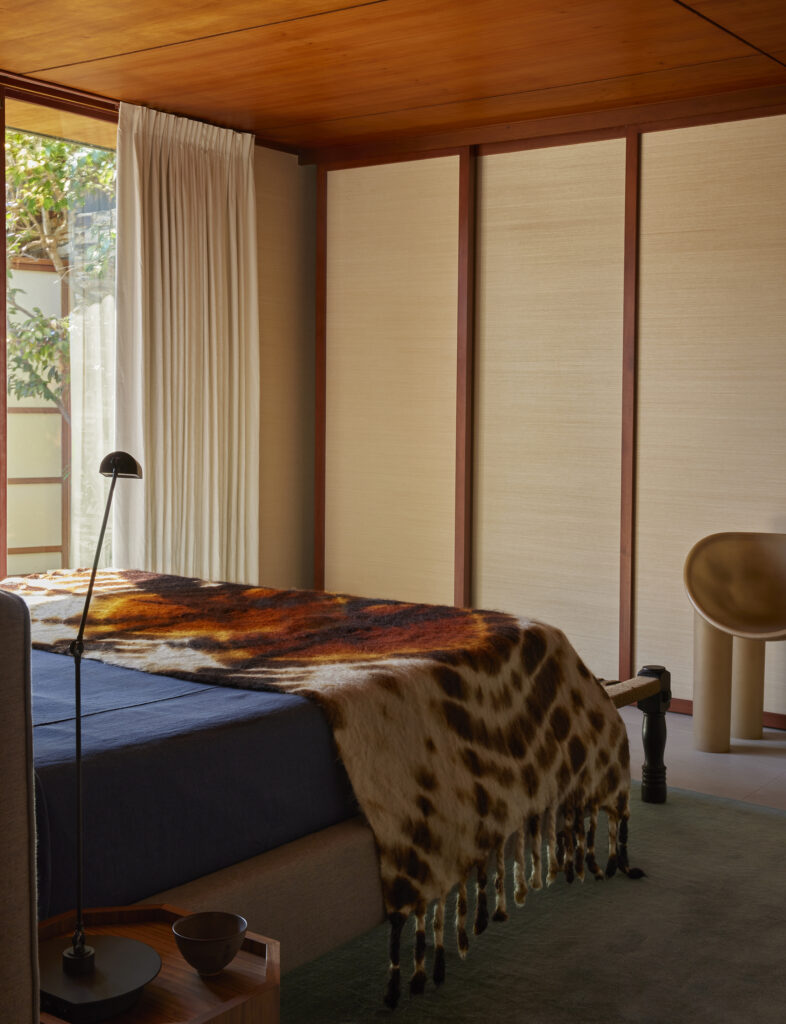
By the time that Hilal joined the project, the clients—a husband and wife—had enlisted Robertson Fletcher/Architects to renovate the 1958 home by architect William Concolino. The original redwood paneling and Japanese-style shoji screens were restored, while the wall-to-wall carpeting was replaced with stone flooring. “It was exciting because I love historical architecture and preservation,” Hilal recalls of his initial impression. “The project was meaningful in that way.”
The clients were in possession of a 1960s Better Homes & Gardens article that featured the residence. “We got to see how they arranged the furniture in the house,” Hilal says. Back then, the generously sized living room was divided into two seating areas and draperies imbued a formality unnecessary for the current homeowners, whose priorities included entertaining and indoor/outdoor living. Hilal approached the living room with this in mind—anchoring it with a double-sided sofa, based on his Big Sur design for Antwerp-based St Vincents. Totaling 18 feet in length, the custom piece with an integrated side table encourages interactions. “We’re not putting any boundaries around how you’re communicating with other people in the space,” the designer says.
To avoid a monolithic mass of a single fabric, he varied the upholstery. The base, backrest and sides are wrapped in a beige Nobilis bouclé with pink undertones. The same textile tops some of the cushions; others are covered in a colorful Pierre Frey graphic pattern or a tweed-like wool blend by Raf Simons for Kvadrat.
Photos by Yoshihiro Makino.
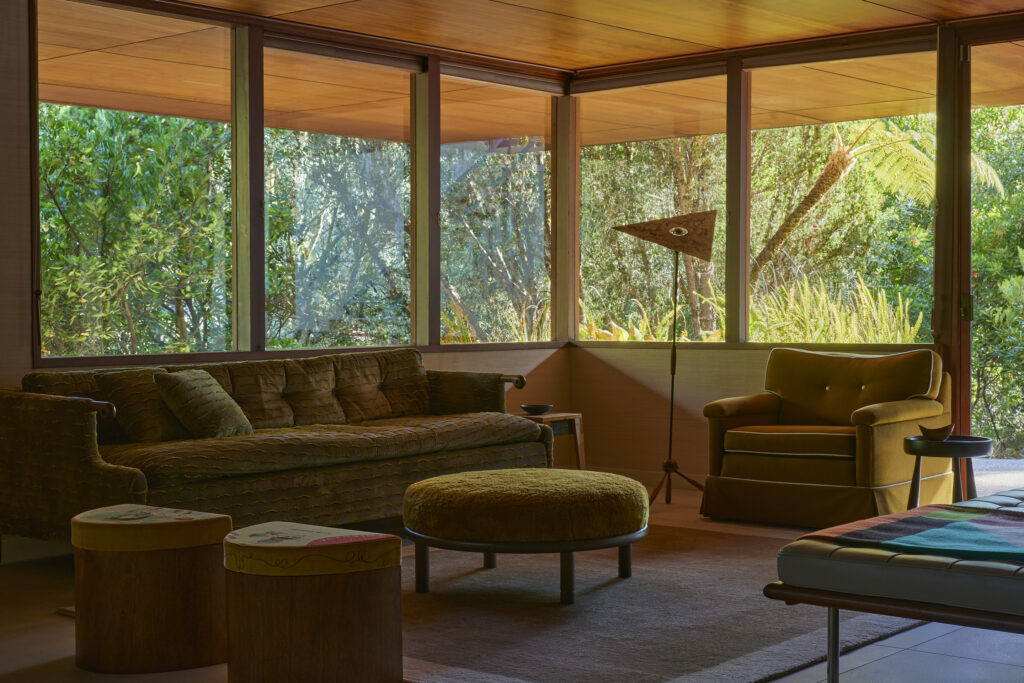
The adjacent dining room holds an Irving Rosen table and Pierre Cardin chairs; both designs date to the 1970s. “If you’re good at bringing in vintage, it will feel timeless,” Hilal says. He is a proponent of combining vintage with contemporary elements. Hence the glass vessel by artist Dana Arbib placed on the table. The property, which is nestled in a woodsy spot, offers verdant views as well as privacy. “The house feels a bit like a tree house,” Hilal observes. In the downstairs den, an earthy palette draws on the scenery outside the windows. An armchair that belonged to the wife’s mother has been revived with a cara- mel Sandra Jordan alpaca fabric and cream piping; a BDDW sofa is upholstered in a Dedar green jacquard velvet; and a Zak+Fox marigold wool velvet reminiscent of fleece was selected for a Lawson-Fenning ottoman. Hilal also introduced different shapes with a pair of Green River Project half-moon stools—their seats comprising hand-painted Bode corduroy—and a 1950s Rupert Nikoll floor lamp with a triangular shade.
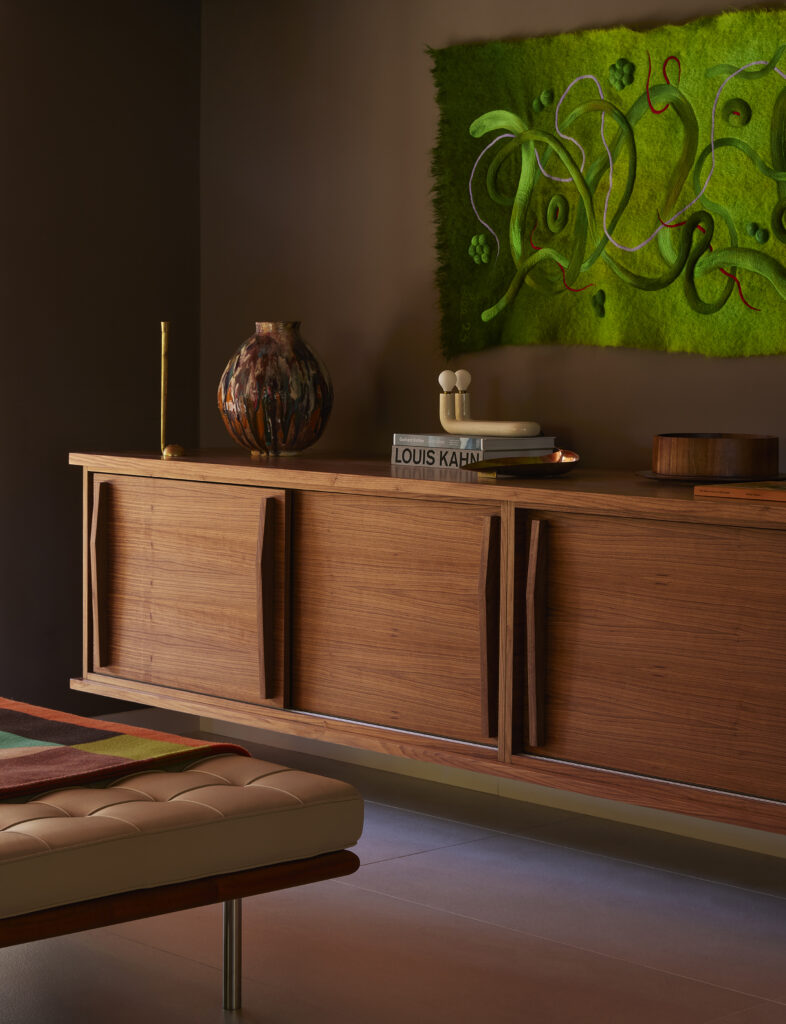
For the walls in the den, Hilal chose Farrow & Ball’s Salon Drab, a deep chocolate brown hue. “On one side [of the room] you have these bright, glowing windows,” he explains. “It’s still a basement, though. So on the other side I leaned into the darkness, but warmed it up.” A Jean Prouvé-inspired walnut wood credenza that Hilal conceived spans about 100 inches and floats on the wall. Above it hangs a custom Studio Liam Lee mohair and merino wool tapestry.
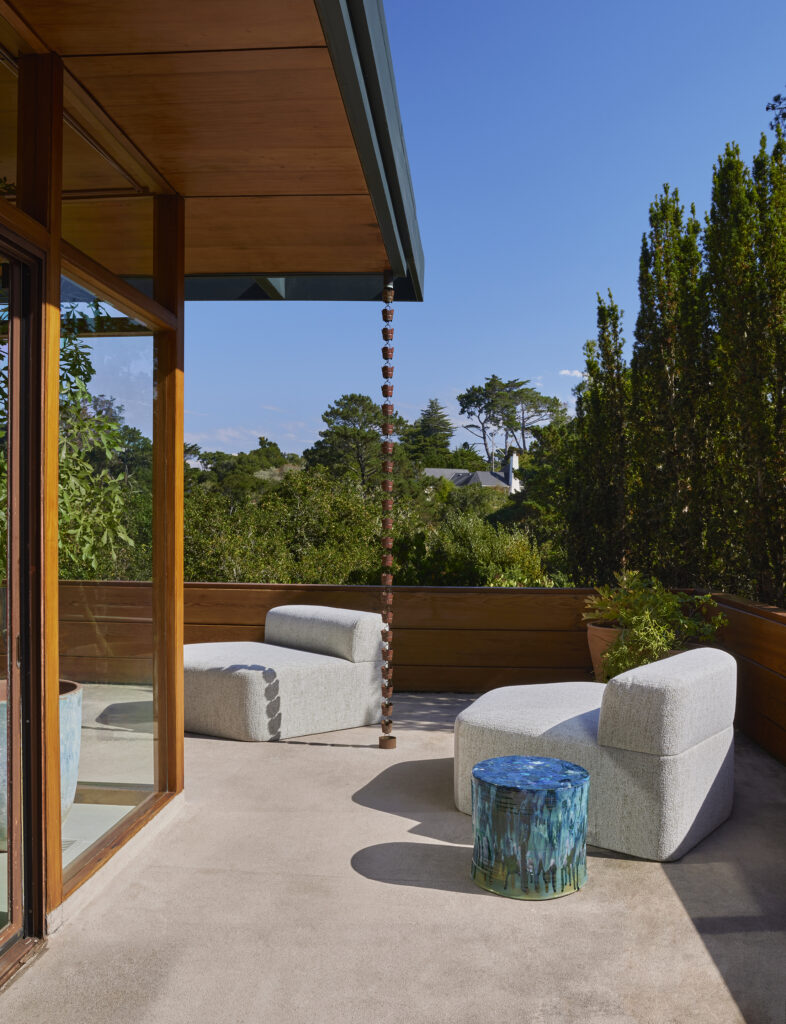
Reflecting on the project, Hilal notes that in updating the interiors for the 21st century, every part of the 2,500-square-foot home is now well utilized by his clients. “We don’t have to take a house back to exactly how it was in the past,” he says. “To me, that’s part of living in California modernism: You honor the past while still looking forward. So it’s like, Let’s restore the house, but let’s completely reframe the use case for it.”